You might want to know...
You might want to know...
Connecting Expertise, Creating the Future
Contact us to explore professional testing technologies and jointly develop efficient and reliable quality controlsolutions.
Glass Bottle Testing Equipment
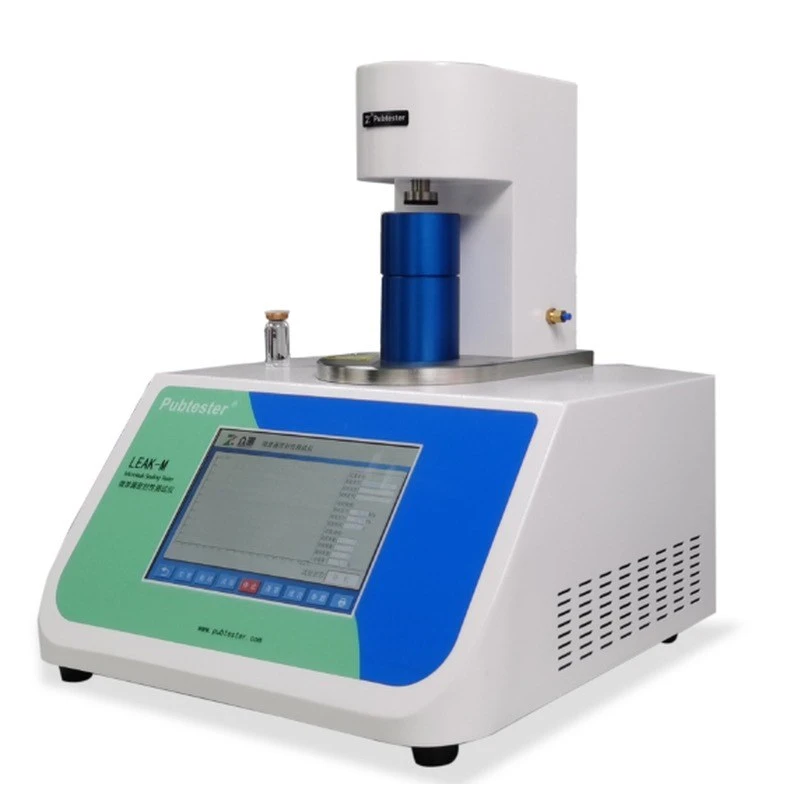
LEAK-M
Micro Leak Tester
LEAK-M Micro Leak Tester is designed based on the vacuum decay method and conforms to the requirements of ASTM F2338-09. It is applicable to test the sealing integrity for different volume injection and lyophilized pharmaceuticals such as vials, ampoule bottles, infusion bottles, prefilled syringes, eye drops bottles, liquid filled packaging, non-porous flexible packages, rigid and semi-rigid packaging. It is also suitable for the detection of minimum leakage points and pinholes in blister packaging, semi-rigid or rigid packaging such as glass vials.
Share:
Product Features
Professional design
10.1" colorful touch screen with intelligent data processing function
Industry-leading 1-3 micron sensitivity detection
Using the principle of vacuum and differential pressure dual sensor method, can detect pressure and time changes
Using trace pressure sensor to detect small pressure changes
Imported pneumatic components and pressure sensors with stable and reliable performance
Multi-level vacuum degree can be preset for gradient test
Automatic design, the instrument determine the end of the test and whether it is qualified
Multiple test units kPa, psi, mbar, mmHg, which can be switched easily
Vacuum degree, test and infiltration time can be setup and stored in the database to ensure the consistency of test conditions
Test curve real-time display, data intelligent statistics, easy to quickly view the test results
Historical test data can be viewed and printed
Micro printer and USB data interface, convenient for data output and transmission
With powerful data storage function, which can up to 50,000 test records
The system has functions such as GMP user management, authority management, and data audit tracking.
Features
Complies with the requirements of USP, ASTM, YY/T standards and can distinguish between large leaks, medium leaks and small leaks.
The host software adopts an encrypted database system, which can perform data storage, query, printing, and other functions.
Equipped with a four-level user security password policy to ensure the security of test data.
The software data integrity complies with the requirements of 21CFR PART 11, and has complete audit tracking, authority management and electronic signature functions; the data cannot be changed and is easy to back up. It is 100% compliant and meets the requirements of FDA/USP1207/ASTM/YY/T.
Security protection
The test chamber adopts liquid anti-leakage design to effectively ensure the safety of the sensor.
Intelligent configurations such as overload protection and power-off memory effectively ensure the user's operation safety.
Over-range shutdown function to effectively protect the sensor.
Test Principle
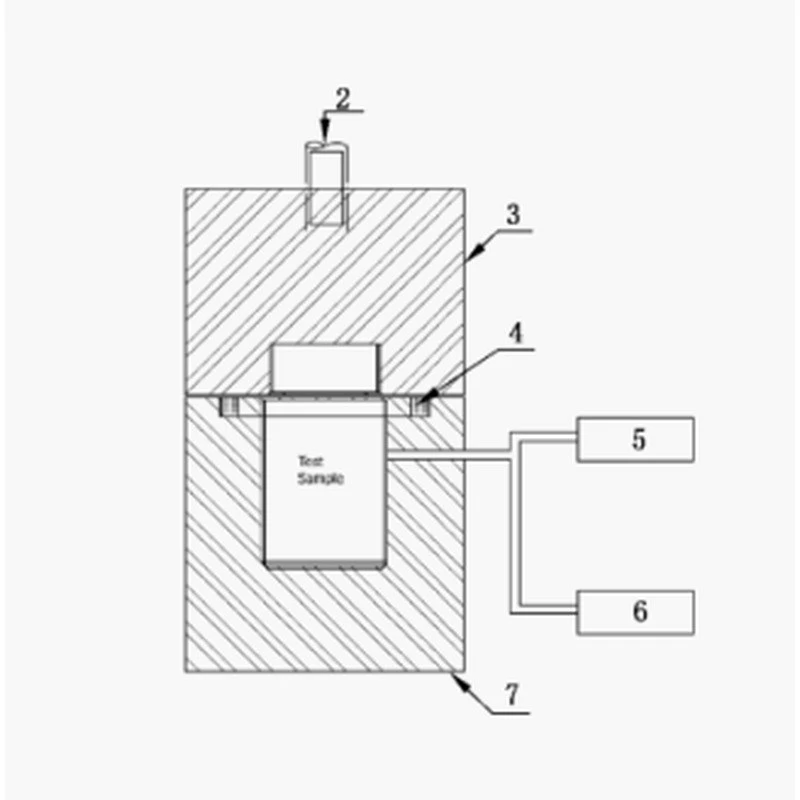
The host is connected to a vacuum decay chamber, the sample is put into it and vacuumed, there is a pressure difference between the inside and outside of the sample, and the gas enters the vacuum decay chamber and the host through the leak hole. The host uses a pressure sensor and a differential pressure sensor to monitor the vacuum degree change in the test chamber, judging whether the sample is qualified by the change of vacuum degree.
Reference Standard
Product Parameter
|
Specifications |
LEAK-M |
|
Absolute Vacuum Degree |
10Pa (0.1mbar) |
|
Sensitivity |
1~3μm pore size |
|
Authority management |
4 level |
|
Opening Method |
Pneumatic |
|
Gas Supply Pressure |
0.7 MPa |
|
Port Size |
Φ6 mm PU Tubing |
|
Display Mode |
10.1"colorful touch screen |
|
Instrument Dimension |
450mm(L)×390mm(W)×410mm(H) |
|
Power Supply |
AC 220V 50Hz / AC 120V 60HZ |
|
Net Weight |
26Kg |
Comparison of common leak test methods:
|
|
Negative pressure method |
Positive pressure method |
Vacuum attenuation method |
|
Method |
Put the sample into water and vacuumizing, observing the leakage situation by whether there are steady progression of bubbles from the specimen or whether the Methylene blue water enters the sample after vacuum reduction |
Punch a hole on the object to be measured, flush gas into it, and put it into water. Observe whether there is a dew point by observing whether there are bubbles emerging during the pressure maintaining process. |
Put the sample into the vacuum chamber, and observe the coincidence of the pressure curves of the sample and the standard sample after vacuumizing, so as to judge whether there is leakage or not |
|
Advantage |
1. The results is visible 2. Widely used 3. High industry acceptance |
low cost High industry acceptance |
1. convenient and fast 2. traceability 3. Repeatable 4.Nondestructive testing 5. Small human factors 6.High sensitivity 7.Quantitative test 8. Easier to detect smaller leakage point and Irregular leak |
|
Shortcoming |
1.Destructive testing 2.Subjective factors, easy to misjudge 3.Low sensitivity and difficult to judge micropores |
1.Destructive testing 2.Long test time 3.Unable to determine the micropores leakage |
High cost |
|
Summary |
The vacuum method is a commonly used method to test the leakage. According to research, although water molecules can pass through when encountering a 5um leak, but it is different to observe when encountering a 5um micropore infiltration of liquid during testing, which makes misjudgment. And the sample can’t be used again after leak testing. |
Each sample for destructive test can only be used for preliminary research, not suitable for product delivery inspection. |
Although the vacuum decay leak tester is expensive, it is currently a more effective, intuitive and efficient leak detection method. Besides, the sample will not be contaminated after inspection and can be used normally. |
Applications
|
Basic Application |
Flexible, non-porous packages including bags and pouches containing solids |
|
Basic Application |
Sealed cups or trays containing solids |
|
Basic Application |
Non-lidded, empty cups or trays |
|
Basic Application |
Rigid, non-porous containers including: |
|
Basic Application |
Plastic screw capped bottles containing solids or liquids |
|
Basic Application |
Glass or plastic vials containing liquids or solids |
|
Basic Application |
Glass or plastic ampoules containing liquids |
|
Basic Application |
Glass pre-filled syringes containing liquids or solids |
|
Basic Application |
Ophthalmic dropper tip bottles containing liquids |
|
Basic Application |
Blow Fill Seal bottle or strip containing liquid |
Configuration
Standard Configuration:Instrument, 10.1 inch Touch Screen, Vacuum chamber, Vacuum Pump, Micro Printer, Data export system
Optional Configuration:Adjustable flowmeter
Need support or have technical questions?
Pubtester’s testing instruments and packaging testing services help you lift efficiency and guarantee product quality. Tap the button to reach our experts and submit your inquiry today.